8% Poverty Rate vs. Identity Wars: France's Social Strain
"The definition of a citizen is being rewritten in the streets and on the screens of France."
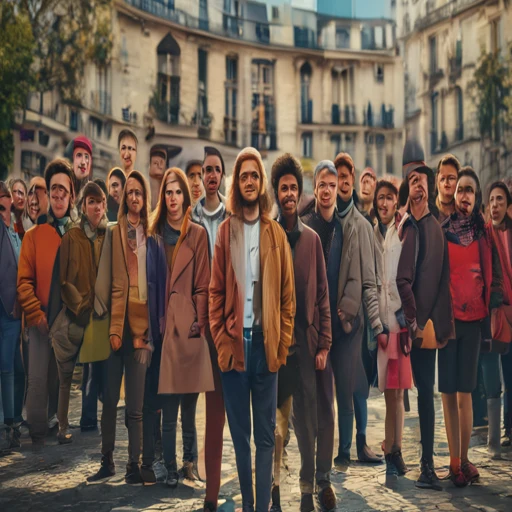
The recent surge in exclusionary rhetoric, specifically the inflammatory claim that "there are no French people" left, has ignited a firestorm across the nation. This isn't just a momentary outburst; it is a symptom of a deepening fracture in how identity is defined in the 21st century.
* The "no Frenchman" sentiment reflects a hardline view of identity that excludes those of immigrant descent. * France faces a complex tug-of-war between traditional assimilation and modern multiculturalism. * Economic disparities and demographic shifts are being weaponized by political actors to fuel identity politics. * Institutional responses are struggling to balance free speech with the prevention of rising racial tension.
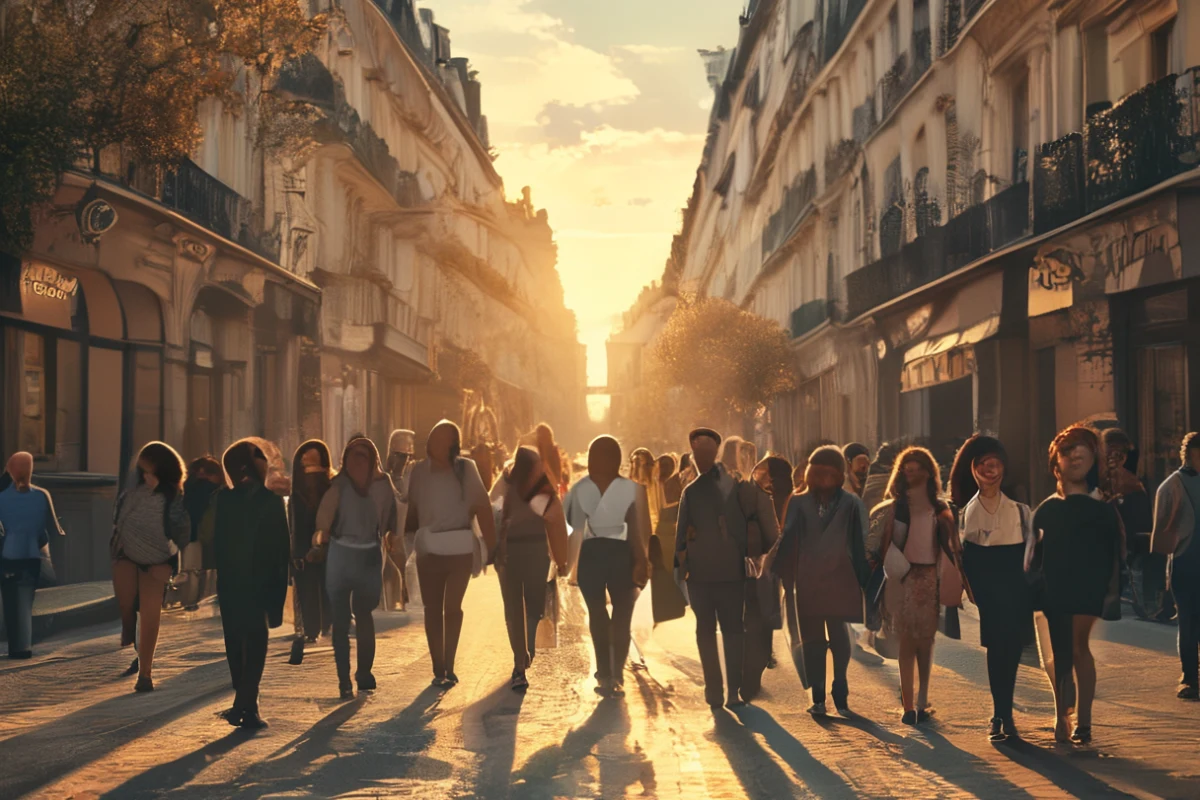
Why is the debate over French identity so heated? A heavy silence often hangs over the cafe tables in Paris when the topic of "who belongs" arises, but the tension is palpable in the way people glance at one another.
I remember sitting at a small bistro table in the 11th arrondissement last autumn, watching a group of students argue intensely over a newspaper headline while an older gentleman at the next table stared into his espresso, looking deeply unsettled.
The question of what makes a person French has shifted from a matter of language and law to a much more volatile debate over bloodline and heritage.
For decades, the French model focused on assimilation—the idea that anyone could become French by adopting the language and values of the Republic. However, a new, more rigid definition is emerging in public discourse.
This version of identity suggests that being French is an immutable trait that cannot be acquired through citizenship or cultural participation.
This shift is largely driven by a generational and political divide. While younger, more diverse populations view identity as fluid, certain political factions argue for a return to a more monolithic national character.
These groups use identity politics as a tool to mobilize voters, often painting the changing face of the country as a loss of own national essence.
The tension between these two worlds—the traditionalist view and the modern reality—creates a constant friction in the public square. As these definitions clash, the rhetoric becomes increasingly sharp, moving from policy debates to personal attacks on the legitimacy of certain citizens.
How does the reality of racism manifest in contemporary France?
Walking through a crowded metro station in Marseille, one might see the subtle ways social hierarchies are enforced through looks and gestures. These small, everyday moments often mask much deeper, documented sociological trends regarding race and religion.
The data suggests that while overt racism is not the majority view, it remains a significant undercurrent.
According to the National and Consultative Commission on Human Rights (Commission nationale et consultative des droits de l'Homme), only 8% of French people believe that some races are superior to others.
While this indicates a general rejection of biological racism, it does not account for the systemic or cultural biases that many minorities face daily.
Religious identity has become a primary flashpoint for these tensions. The same Commission reported that 34% of the French population view Islam in a negative light, and 50% consider it a menace against the national identity.
This specific demographic tension often fuels the "no Frenchman" rhetoric, as certain groups are viewed as being unable or unwilling to integrate into the secular framework of the state.
These statistics highlight a society where identity is frequently viewed through the lens of religious and ethnic compatibility.
The intersection of these views creates a landscape where large segments of the population feel their identity is under threat, while minority groups feel their right to belong is being systematically questioned.
How is the economy causing social friction in France? A worker standing in a long queue at a government employment office might feel the weight of economic uncertainty, which often colors their view of "the other." Economic hardship frequently acts as a catalyst, turning cultural differences into perceived competition for scarce resources.
Economic stability plays a massive role in how social cohesion is maintained. According to OECD data from 2021, the poverty rate in France was estimated at 8.4%.
To put this in perspective, it sits higher than the rates seen in some neighboring European nations but remains significantly lower than the 18% poverty rate in the United States or the 11.6% in Canada.
When economic precarity hits, it often finds a scapegoat. In times of tightening budgets, the "outsider" is frequently blamed for the erosion of the social safety net.
This sense of being "unseen" or "left behind" by the national economy allows political leaders to frame immigration and identity as zero-sum games.
The link between the wallet and the identity is direct. If a segment of the population feels they are losing their economic standing, they are more likely to embrace hardline identity politics as a way to reclaim a sense of control.
This makes the debate over "who is French" not just a cultural argument, but an economic one.
The Political Landscape: Extremism and Electoral Divides
A campaign poster peeling off a brick wall in a provincial town serves as a silent witness to the massive shifts in French voting patterns. The political landscape has become increasingly polarized, moving away from the center toward the fringes.
The recent presidential election cycles illustrate this volatility. In the first round of the 2022 election, Emmanuel Macron finished first with 28% of the vote, followed by Marine Le Pen with 23%, Jean-Luc Mélenchon with 22%, and Éric Zemmour with 7%.
The second round saw Macron defeat Le Pen, but the underlying support for much more radical views remained significant.
These results show that while the centrist candidate may win the presidency, the "identity-first" movements hold a massive, organized block of voters.
The influence of candidates like Zemmour, who leaned heavily into identity-based rhetoric, has pushed the boundaries of acceptable political discourse in France.
The structure of these elections often forces a choice between two different visions of the country.
This "two-round" system can sometimes mask the depth of the divide, as voters often coalesce around a "lesser of two evils," leaving the radical elements of the electorate feeling unrepresented but highly motivated.
| Category | Statistic / Detail | Source |
|---|---|---|
| Total Population (2025) | 68,720,337 | World Bank |
| Poverty Rate (France) | 8.4% | OECD (2021) |
| Poverty Rate (USA) | 18% | OECD (2021) |
| Belief in Racial Superiority | 8% | National Commission on Human Rights |
| View Islam as a Menace | 50% | National Commission on Human Rights |
How can society navigate these identity shifts?
A local community center organizing a multi-cultural food festival represents the quiet, everyday work of integration that rarely makes the front page. While the headlines focus on conflict, the ground-level reality is often much more nuanced.
Civil society organizations work tirelessly to monitor hate speech and provide legal support to those targeted by xenophobia.
These groups argue that the "no Frenchman" rhetoric is not just offensive but dangerous, as it undermines the legal definition of citizenship and creates second-class citizens.
However, there is a disconnect between the political rhetoric and the reality of local communities. In many cities, people of various backgrounds live, work, and raise families together with minimal friction.
The "identity crisis" is often most loud in the digital sphere and in national political debates, rather than in the daily interactions of neighbors.
Whenever I travel through different French regions, I try to follow a specific pattern to understand the local pulse:
- Observe the demographic makeup of local markets and public squares.
- Listen to the themes dominating local newspaper editorials.
- Engage in casual conversation with residents regarding local economic shifts.
- Compare the local political leaning with the national averages.
The media's role in this is critical. There is a constant tension between the need to report on significant social movements and the risk of amplifying inflammatory rhetoric that can lead to real-world violence.
As the debate continues, the question remains whether France can find a way to reconcile its historical identity with its modern, diverse reality.
FAQ
What is the current demographic reality of France? As of 2025, the total population of France is recorded at 68,720,337 according to World Bank data.
How does the poverty rate compare to other nations? According to 2021 OECD data, France's poverty rate of 8.4% is lower than the United States (18%) and Canada (11.6%), but higher than some other European neighbors.
What are the main drivers of the identity debate? The debate is driven by a combination of demographic shifts, migration patterns, economic anxiety, and the rise of political movements focused on traditionalist identity.
Does the majority of France believe in racial superiority? No. Data from the National and Consultative Commission on Human Rights indicates that only 8% of French people believe some races are superior to others.



Comments 0