France student protests election: Best guide to civil unrest
"The streets are no longer just for marching; they have become the classroom where the future of our political landscape is being rewritten."
The current wave of student activism in France is driven by systemic educational stressors and extreme environmental conditions, creating a direct path toward political upheaval.
This movement, characterized by widespread school blockades and significant legal repercussions for young participants, reflects a deep-seated friction between the youth and the state.

Key takeaways include the high rate of minor arrests, the physical discomfort of classroom environments, and the growing tension regarding legislative responses to civil unrest.
How did student protests shape French elections?
A student walks through a crowded hallway, clutching a backpack while dodging groups of peers discussing the latest political shifts.
The movement is fueled by immediate grievances, such as stress linked to the university application website Parcoursup and high temperatures in classrooms that reached up to 40 °C (104 °F) during the 2026 European heatwaves.
These daily struggles have transformed local grievances into a broader movement.
As the tension builds, the student activism election impact becomes visible in the sheer scale of mobilization across various regions. This movement is not merely about school policy but represents a growing demographic demand for systemic change.
The scale of the disruption suggests that student protests shaping French elections is a growing reality, as young voters begin to align their academic frustrations with political goals.
However, the influence of these movements on election outcomes may be limited when voter turnout remains low.
What is the social conflict France politics reality? France student protests election
As dusk falls over the streets of france, a protester feels the cold wind while staring at a closed gate.
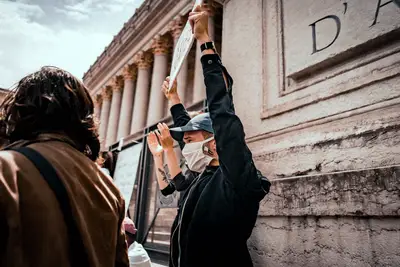
A group of protesters stands before a closed school gate, their faces reflecting a mix of determination and exhaustion. The social conflict France politics reality is increasingly defined by the friction between student unions and government authority.
Legislative responses, such as a bill making protesters liable for up to 10,000 euros from vandalism and damages, have added fuel to the fire.
The tension remains high as the youth response to French politics becomes a central theme in national discourse.
Labor unions have accused Emmanuel Macron of making protesters liable for vandalism and damage by introducing this bill, which was originally drafted as a response to the Paris Saint-Germain victory riots in May 2026.
This legal pressure has turned school-based unrest into a high-stakes political battle.
This analysis does not apply to periods of relative political stability.
How does civil society and election dynamics manifest in the streets?
A police officer monitors a gathering crowd from a distance, noting the energy of the young demonstrators. The intersection of civil society and election dynamics is seen in the high level of public support for the students.
A poll conducted by Odoxa for the think tank Backbone and the paper Le Figaro indicated that 62% of French people believed that the students' movement was justified.
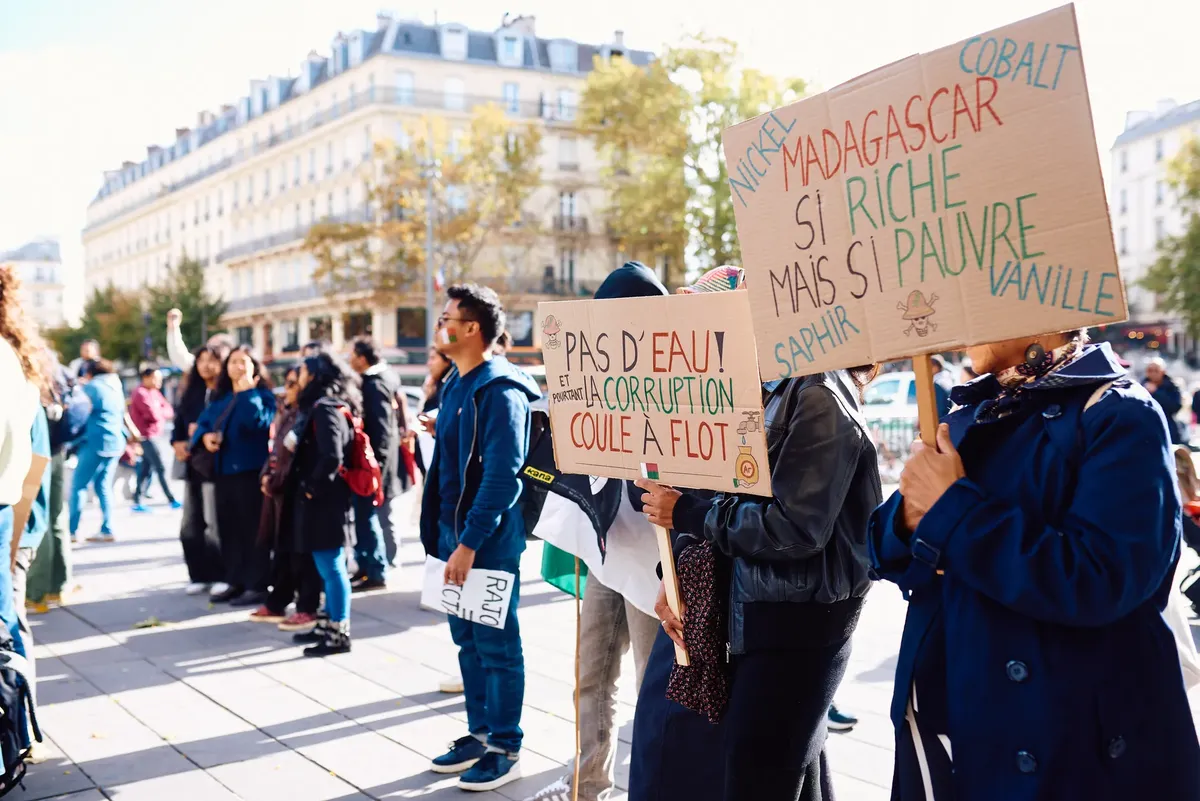
The scale of the response is significant, with the High School Students Union stating that around 1,800 high schools were either blockaded or would close for the day. Protests were reported in Marseille, Nantes, and Lyon, where the demonstrations started peacefully.
This widespread participation demonstrates how local student issues can rapidly evolve into national political movements.
The impact of street demonstrations is less pronounced when they occur far from major urban centers.
What are the legal consequences for the youth?
A young person sits in a quiet room, facing the reality of legal proceedings following a demonstration. The legal fallout has been disproportionately heavy for the younger generation.
As of 6 October, the Justice Ministry reported that 5,060 people had been arrested since the protests began, with 87% of them being minors.
The intensity of the crackdowns has led to significant scrutiny of law enforcement.
By mid-October, the Inspectorate General of the National Police (IGPN) had opened at least 24 to 36 internal investigations into alleged police misconduct related to the protests, according to varying official figures reported by the Interior Ministry and prosecutors.
These investigations highlight the volatility of the current social climate.
The severity of legal outcomes varies depending on the specific nature of the offense.
How are student unions organizing?
An organizer stands at a podium, coordinating the movements of various student groups. The organizational structure is diverse, involving multiple unions working toward common goals.
The Union syndicale lycéenne and Union étudiante called for joint mobilisation by secondary-school and university students on 1 October.
Other groups also play a vital role in the mobilization. Other lycée student unions supporting student mobilization and protests included the National High School Student Movement, the Student Union, and the "Les Lycéens!" union.
These groups provide the logistical backbone for the ongoing demonstrations.
This sequence of organizational efforts is not applicable to decentralized movements.
What are the specific causes of student stress?
A student stares at a computer screen, navigating the complexities of a digital application process. Beyond the political atmosphere, the physical and digital environments of schooling contribute to the unrest.
Students noted stress linked to the university application website Parcoursup and high temperatures in classrooms that reached up to 40 °C (104 °F) during the 2026 European heatwaves.

The physical conditions in some schools are equally taxing. A 17-year-old pupil at the Lycée Paul-Éluard in Saint-Denis described temporary toilets without water, rats and cockroaches in school, and temperatures ranging from −5 °C in winter to 40 °C in summer in temporary classrooms.
These conditions make the call for change a matter of daily survival for many.
The intensity of these stressors is not universal across all academic disciplines.
- How did student protests shape French elections?
- What is the social conflict France politics reality?
- How does civil society and election dynamics manifest in the streets?
The subject here is France student protests election.
The same subject is also called French youth political unrest.
This part also covers Political tension in French society.
Related


Comments 0