What is the scale of French social security?
"The heart of French society lies in the tension between a robust social safety net and the realities of economic stagnation."
This analysis explores the economic structure and social realities of France, focusing on its digital transformation and the scale of its social security.
Key takeaways include the presence of a significant state-controlled sector, the large scale of the social security system relative to GDP, and the challenges posed by its diverse economic composition.
What is the scale of French social security?
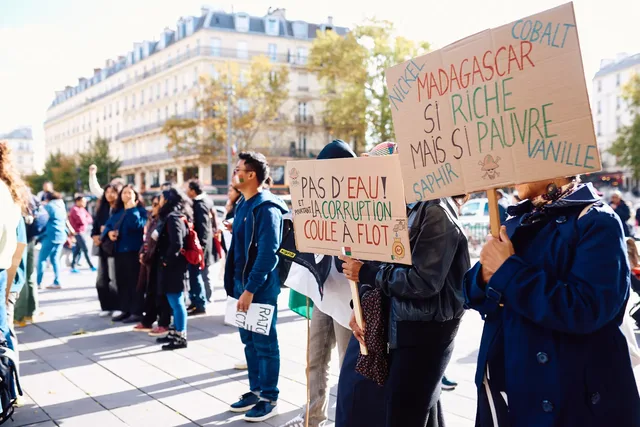
The Parisian market pulsed with the sheer scale of the social security system during the early morning rush.
A researcher walks through a bustling Parisian market in the early morning, preparing for a busy week ahead. The social security system is a massive component of the French economy, acting as a primary buffer against economic shocks.
Among OECD members, France has a highly efficient and strong social security system, which comprises roughly 31.7% of GDP. This strong social net is a foundational part of the country's economic identity.
This system ensures a significant level of support for its population.
How large is the French economy? France social issues analysis
A traveler looks at a map of Europe while sitting in a bustling cafe in Paris. The French economy is a major player on the world stage, with a significant share of global trade and financial activity.
The French economy is a significant economic force in Europe and globally. It is the world's seventh-largest economy by nominal GDP and the ninth-largest economy by PPP, constituting around 3% of world GDP.
This scale means that shifts in the French market can ripple across the entire continent.
What is the structure of the French economy?
A trader checks a spreadsheet in a busy office in Lyon during the late afternoon. The French economy is characterized by a heavy reliance on the service sector, while the industrial base remains substantial.
The French economy is diversified, with the service sector dominating the employment landscape. In 2017, the service sector represented 78.8% of its GDP, while the industrial sector accounted for 19.5% of its GDP and the primary sector accounted for the remaining 1.7%.
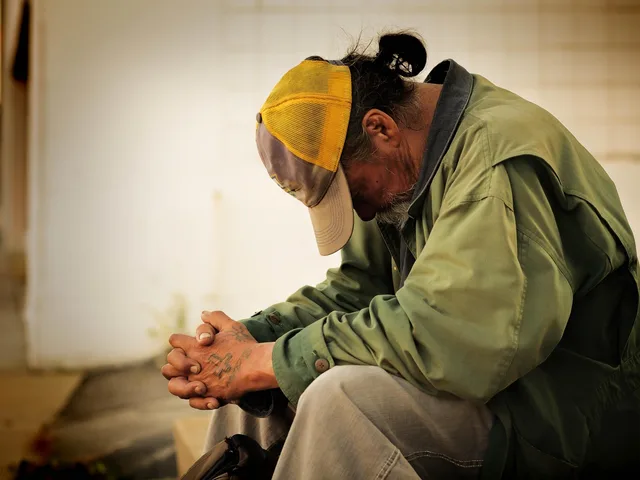
This structure highlights the shift towards service-based growth in recent years.
What is the poverty rate in France?
A social worker visits a community center in a working-class neighborhood during the late evening. Understanding the poverty rate is crucial for anyone managing social services in the country.
According to France’s National Institute of Statistics and Economic Studies (INSEE), 1,751 French companies were state-controlled by the end of 2017.
The poverty rate in France is significantly lower than in many other developed nations.
This indicates a higher degree of economic security for a larger portion of the population.
How does the French economy compare to other nations?
A researcher sits at a desk in a university library, comparing growth figures from different countries. The French economy's performance can be seen through the lens of its social structures and industrial shifts.
The economic landscape includes a strong social safety net and a large service sector. However, the economy faced challenges during specific periods. For example, France experienced stagnant growth between 2012 and 2014, with the economy expanding by 0% in 2012, 0.8% in 2013 and 0.2% in 2014.
These periods of stagnation are part of the broader economic history of the nation.
What is the nature of state control in France?
A historian looks through old documents in a municipal archive to trace the roots of French industry. The extent of state control over companies remains a notable feature of the nation's industrial landscape.

This level of state involvement in corporate assets is a direct result of the country's unique economic history.
The French economy remains a complex entity defined by its strong social commitments and its place within a globalized market.
- What is the scale of French social security?
- How large is the French economy?
- What is the structure of the French economy?
The subject here is France social issues analysis.
The same subject is also called French current affairs debate.
The same subject is also called France education policy news.
The same subject is also called Social order in France.
The same subject is also called Political controversy France.
This part also covers Legal questions in French schools.
This part also covers Daily life changes France.
This part also covers Analyzing French social trends.
Legal questions in French schools
How does the French economy compare to other nations?
A researcher sits at a desk in a university library, comparing growth figures from different countries. The French economy's performance can be seen through the lens of its social structures and industrial shifts.
The French economy's performance can be compared to other major European economies by looking at the ratio of social spending to GDP.
While the French social net is robust, the pace of growth in the service sector has sometimes lagged behind neighboring nations that have focused more on digital integration.
This comparison reveals that while the French model prioritizes social equity through high social spending, it may face headwinds in periods of rapid technological shifts compared to more digitally integrated economies.
What is the structure of the French economy?
A trader checks a spreadsheet in a busy office in Lyon during the late afternoon. The French economy is characterized by a heavy reliance on the service sector, while the industrial base remains substantial.
The dominance of the service sector is evident in the employment landscape, where the sector accounted for 78.8% of its GDP in 2017. This reliance on services means that the economy is highly sensitive to changes in consumer spending and global trade flows.
The industrial sector, accounting for 19.5% of GDP in 2017, remains a vital component, though it continues to evolve. The primary sector, representing 1.7% of GDP, contributes less to the overall economic output.
Related
Comments 0