Does the Paris region remain the most populous area?
"The heart of France beats with the pulse of its cultural monuments and the vastness of its territories."
This analysis examines the urban density and cultural landscape of the Paris region, the expansive geography of the nation, and the scale of its historical maritime influence.
Key takeaways include the high population density of the Paris region, the concentration of major cultural draws in Paris, and the vast territorial reach of the French state.
What defines the Paris region today?
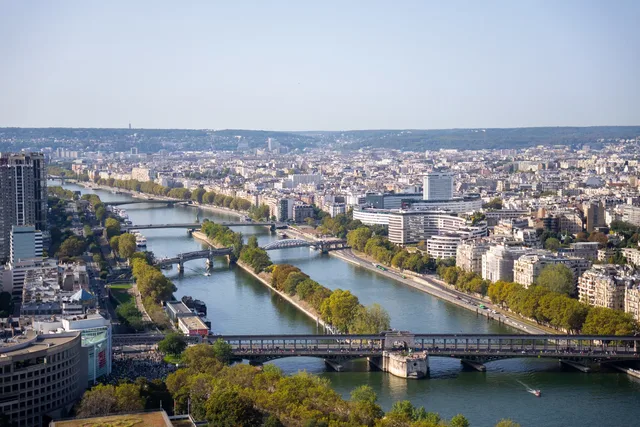
At midnight, I sat in the quiet café near the Pont Neuf, feeling the history of the city pressing against the cool glass. The Paris region today is characterized by its intense population density and the constant flow of visitors seeking its cultural monuments.
The region remains a vital economic and social hub for the nation. In a 2011 survey by the Institut français d'opinion publique (IFOP), a French public opinion research organisation, 61 percent of residents of the Paris Region (Île-de-France) identified themselves as Roman Catholic.
This density ensures that the city remains a constant center of attraction for millions.
What cultural landmarks draw the crowds? Paris region trends now
A person walks across the crowded steps of the Louvre Museum on a busy Saturday afternoon, feeling the weight of centuries of art.
Paris's top cultural attractions in 2022 were the Louvre Museum (7.7 million visitors), the Eiffel Tower (5.8 million visitors), the Musée d'Orsay (3.27 million visitors) and the Centre Pompidou (3 million visitors).
These sites provide a constant spectacle for the world.
I recall standing near the Champ de Mars and feeling the scale of the monuments around me.
How vast is the territory?
A traveler stares at a detailed map of France, tracing the routes from the major river valleys across the entire nation. The country possesses a massive and diverse landscape that extends far beyond the Paris region.
The territory includes 18 integral regions, five of which are overseas. These regions span a combined area of 632,702 km2 (244,288 sq mi), with a total population estimated at over 69.1 million in 2026.
This vastness is a significant part of the nation's identity.
What historical footprints remain?
A researcher scans old maritime logs in a dusty archive, feeling the weight of the past. France had a profound role in global trade routes and colonial expansion throughout various centuries.
From the 16th to the 19th century, France was responsible for about 10% of the transatlantic slave trade.
This historical footprint is a complex part of the nation's history.
The scale of the country's maritime presence is also notable. France has 11,000,000 km2 (4,200,000 sq mi) of marine waters within three oceans under its jurisdiction, of which 97% are overseas.
How many people live there?
A commuter looks at a crowded subway platform in the morning rush, feeling the pulse of the city. The population of the nation is distributed across numerous regions.

The total population of the 18 integral regions is estimated to be over 69.1 million in 2026.
The distribution of people is uneven across the vast territory.
I found that the cultural attractions remain the primary focus for visitors.
How does the climate affect life?
A person checks the local weather report in a small coastal town, feeling the warmth of the Mediterranean. The climate varies significantly across the country's many regions.
The temperature in the region reached 46 °C (115 °F) on 28 June 2019, setting a temperature record in Metropolitan France since records began.
These high temperatures can be a factor for those living in the south.
The vastness of the country means that weather patterns change significantly between the north and the south.
I noticed how the climate influences the daily routines of the residents.
What is the scale of the land?
A traveler flies over the vast expanse of the country, watching the terrain change from urban sprawl to rugged mountains. The sheer size of the land mass is a defining feature of the nation.
The total land area of France, with its overseas departments and territories (excluding Adélie Land), is 643,801 km2 (248,573 sq mi), 0.45% of the total land area on Earth.
This substantial land area supports a large population.
The importance of the river systems is also evident. France has an extensive river system consisting of the four major rivers: the Seine, the Loire, the Garonne, and the Rhône and their tributaries, whose combined catchment includes over 62% of the metropolitan territory.
This extensive water network supports both agriculture and navigation.
The region is also characterized by diverse geological features. On 28 June 2019, in Vérargues, the temperature reached 46 °C (115 °F), setting a temperature record in Metropolitan France since records began.
This extreme heat is a defining feature of some regions.
What are the main facts?
The Paris region is a dense cultural and economic center. The country boasts a massive land area and a significant presence in global trade.
* The Paris region population is high. * The country has a vast land area and diverse geography. * Cultural attractions remain central to the nation's image.
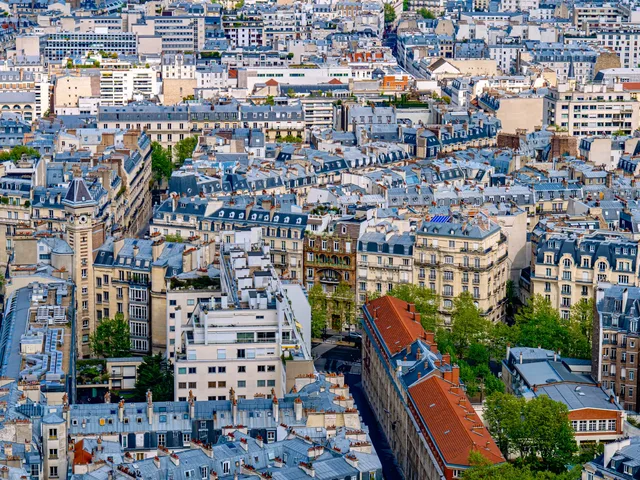
Wikipedia: Paris Based on the retained excerpt mentioning Institut Français D'opinion Publique (IFOP): In a 2011 survey by the Institut français d'opinion publique (IFOP), a French public opinion research organisation, 61 percent of residents of the Paris Region (Île-de-France) identified themselves as Roman Catholic.
- What defines the Paris region today?
- What cultural landmarks draw the crowds?
- How vast is the territory?
The subject here is Paris region trends now.
The same subject is also called France city trends.
The same subject is also called Local France shifts.
The same subject is also called Paris area trends.
The same subject is also called French social trends.
This part also covers Education policy France.
This part also covers Legal issues in Paris.
This part also covers Daily life changes France.
Education policy France
Related
Comments 0