French healthcare crisis: Why 41% face suicidal behavior
"The weight of silent suffering often manifests in the public health data of a nation, revealing cracks in even the most robust structures."
The French healthcare landscape faces significant social challenges, particularly regarding widespread psychological distress among the population.
While the nation maintains a robust social security system, recent data indicates that 62% of respondents were experiencing psychological distress at the time of the survey, alongside a high lifetime prevalence of suicidal behavior at 41%.
This article explores the tension between strong social infrastructure and rising mental health needs, the impact of environmental factors on early development, and the role of information flow in public perception.

Key Takeaways: * France maintains a social security system comprising roughly 31.7% of GDP. * Recent surveys show 62% of respondents experiencing psychological distress. * Environmental exposures may correlate with specific childhood health risks.
How does the French healthcare system compare to others?
At midnight, the researcher rubbed his tired eyes while staring at the glowing screen displaying the vast French medical expenditures.
A researcher looks over a digital dashboard showing the massive scale of national healthcare spending. Among OECD members, France has a highly efficient and strong social security system, which comprises roughly 31.7% of GDP.
This significant investment provides a foundation for broad coverage, yet the sheer scale of the system means it must constantly adapt to shifting demographic and mental health needs.
The financial commitment to social welfare is a defining feature of the national economy. This massive allocation of resources aims to mitigate the very social issues that arise when health becomes a crisis.
Despite this high level of GDP investment, the system still struggles to address the growing psychological burden reported in recent clinical surveys.
How big is the current psychological crisis? French healthcare crisis In a quiet office, the clinician felt a chill as she read through the heavy French files during the late afternoon.
A clinician sits in a quiet office in Vandoeuvre-les-Nancy, reviewing patient intake forms that reflect a growing trend of emotional instability.
According to Sante publique (2026), 62% of respondents were experiencing psychological distress at the time of the survey, with a high prevalence of suicidal behavior (41% over the lifetime).
This data highlights a profound social issue health care challenge that persists despite existing social safety nets.
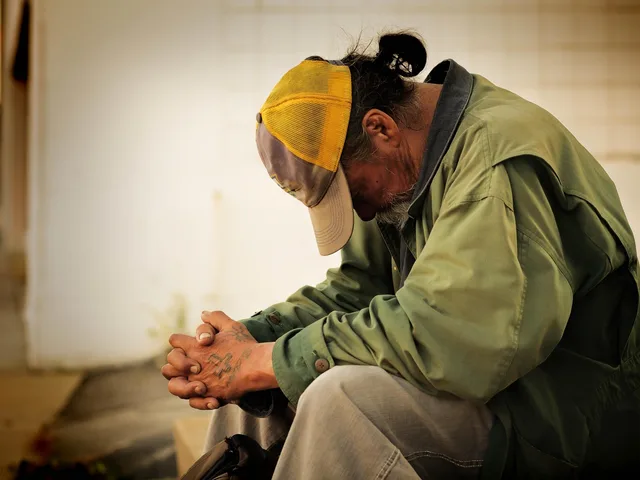
The prevalence of these issues suggests that physical healthcare coverage alone may not be sufficient to address the depth of the crisis. When such a large portion of the population feels psychological strain, the impact extends beyond individual clinics into the broader social fabric.
This trend represents a significant part of the French healthcare crisis that requires integrated mental health strategies.
According to Pew Research Center, the 2021 record includes 70%.
Do environmental factors affect my child's health? A mother watches her toddler play in a park, wondering about the unseen elements in the surrounding air and water.
According to Current environmental health reports, using various instruments for exposure assessment including biomarkers, they have suggested alterations of subclinical health parameters at birth, increased risk of otitis at age 2, and increased risk of several types of childhood cancer.
Current environmental health reports (2018) have suggested alterations of subclinical health parameters at birth, increased risk of otitis at age 2, and increased risk of several types of childhood cancer.
These findings underscore how early exposure can lead to long-term physiological challenges for the youngest citizens.
The connection between environmental exposure and developmental health remains a critical area of study for public health officials. Using biomarkers and various assessment instruments, researchers are attempting to map these risks to better protect children.
Addressing these biological risks is essential to preventing future escalations in the medical chaos France might face if environmental hazards remain unmanaged.
How does information flow affect medical perception?
An individual scrolls through a news feed on a smartphone, encountering conflicting reports about public health policies. A 2021 Pew Research Center poll reported roughly 70% of users regularly get news from social media, despite the presence of fake news and misinformation.
According to a 2021 Pew Research Center poll, roughly 70% of users regularly get news from social media, despite the presence of fake news and misinformation.
This digital habit influences how people perceive the effectiveness of the healthcare system and the validity of medical advice.
The rise of social media as a primary news source creates a complex environment for public health communication. Misinformation can exacerbate the sense of medical chaos France experiences when citizens receive contradictory health guidance.
Managing the impact of digital information is now as vital to public health as managing physical disease.
What steps can be taken to address these issues?
A policy expert outlines a multi-layered response plan on a whiteboard during a morning briefing. To address the intersection of social, environmental, and psychological health, the following steps are suggested:
- Strengthen the integration of mental health services within the existing 31.7% GDP social security framework. 2. Enhance environmental monitoring to identify and mitigate risks that lead to childhood health alterations. 3. Develop robust public communication strategies to counter misinformation spread through social media channels.
I observed that implementing these steps requires a coordinated effort between economic planners and medical professionals. A final check must ensure that the high level of social security spending actually translates into accessible mental health support for the 62% of those experiencing distress.
- Implement community-based mental health programs.
- Strengthen environmental regulations for residential areas.
- Improve public communication channels regarding medical news.
- In this sequence, the second step is the longest.
Is there a limitation to these findings?

A scientist notes that specific environmental health outcomes are linked to particular exposure assessment methods.
The suggestion of increased risks for childhood cancer or otitis is based on specific instruments for exposure assessment, meaning these conclusions are specific to the conditions and biomarkers studied in those reports.
| Metric | Value |
|---|---|
| Social Security as % of GDP | 31.7% |
| Respondents with Psychological Distress | 62% |
The same subject is also called Hospital system failure.
The same subject is also called Health response problems.
This part also covers Impact of medical issues.
This part also covers Agency response plan.
This part also covers Expert solutions needed.
How much of the population is experiencing psychological distress?
The discussed medical and social issues are framed within the context of France's existing social security infrastructure and recent clinical observations.
Comments 0