How does historical growth shape social impact?
A single melody can cross oceans, yet the intersection of cultural identity and historical shifts remains a complex landscape of influence.
The social impact of cultural elements often depends on the demographic shifts and educational structures of the host nation. This analysis explores how historical growth and modern educational networks shape cultural integration.
We will examine demographic changes, educational reach, and the complexities of social distribution.
Key takeaways: * Historical population growth and urbanization changed social structures. * Educational networks provide a foundation for cultural presence. * Modern distribution of language speakers shows a globalized demographic.
How does historical growth shape social impact?
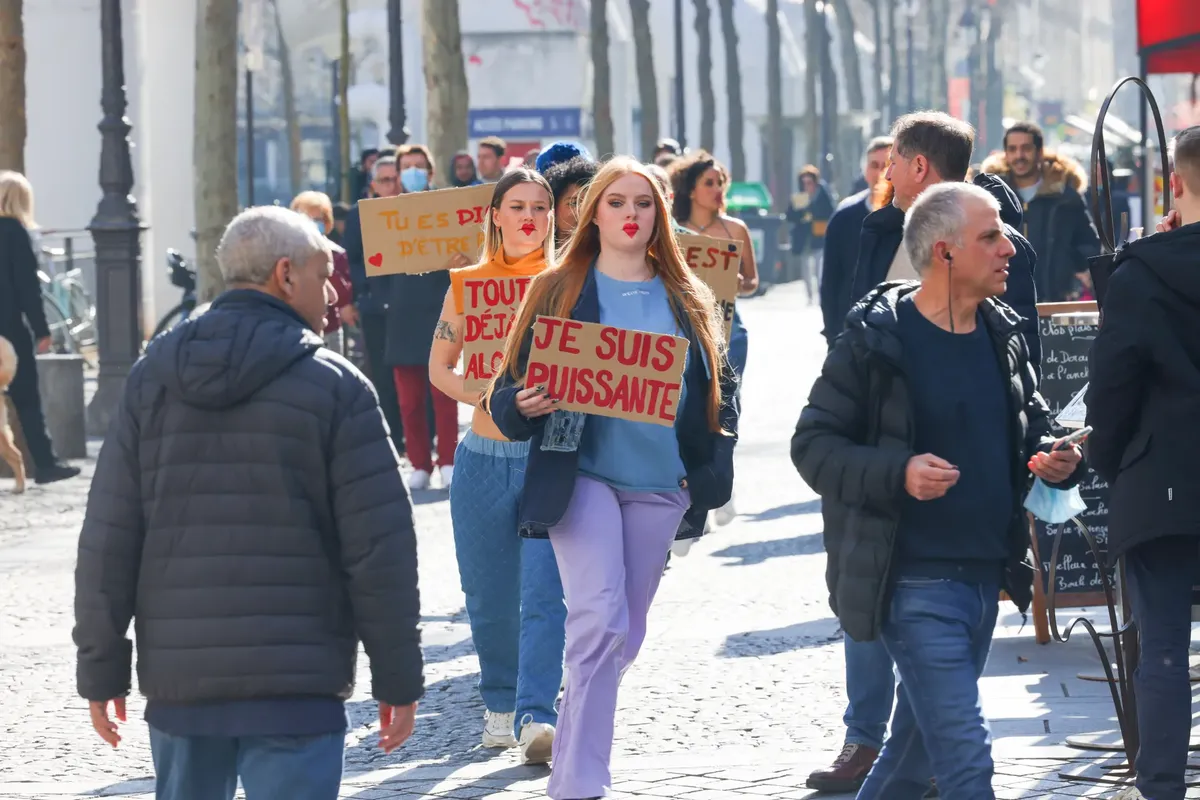
A person walks through the streets of a bustling city, reflecting on how the density of inhabitants changes the way culture spreads.
Between 1715 and 1789, the French population grew from 21 to 28 million, with 20% of people living in towns or cities, including Paris which had over 600,000 inhabitants. This massive shift in population density created a fertile ground for cultural exchange and social movement.
The movement of people into urban centers fundamentally altered the social landscape. As the population expanded, the concentration of people in cities allowed for faster dissemination of ideas and artistic expressions.
This urban environment acted as a catalyst for the social impact of various cultural movements.
The rise of new social classes also played a role in changing the demographic weight of the nation. During the same period, the middle class tripled in size, comprising almost 10% of the population by 1789.
This growing group brought new perspectives to the social fabric, ensuring that culture was no longer the sole domain of the elite.
- Identify the origins of demographic expansion.
- Analyze how resource accumulation altered community hierarchies.
- Evaluate the long-term shifts in social influence.
What is the role of educational networks in cultural presence?
In the quiet library at noon, the student feels the weight of a heavy book and wonders how a vast network does carry a single voice across the world.
A student opens a textbook in a remote classroom, realizing the reach of international educational systems. The Agency for French Education Abroad has 600 locations and 397,000 students as of 2025.
According to The Agency, the Agency for French Education Abroad has 600 locations and 397,000 students as of 2025.
Such a vast network ensures that cultural and linguistic elements are distributed across various geographic regions.
These locations serve as hubs for maintaining and spreading linguistic traditions. By providing structured learning environments, these institutions facilitate a consistent cultural presence. This systematic approach allows for a broad reach that transcends local borders.
The scale of these educational efforts provides a stable foundation for cultural influence. With nearly 400,000 students engaged in these programs, the potential for long-term social impact through education is significant.
This connectivity helps maintain a cohesive identity across diverse locations.
In this sequence, the second step is the longest.
How is modern culture distributed globally?
In the quiet library at noon, the student stares at the digital screen and contemplates how a single melody does travel across the vast world.
A traveler looks at a map, noting the wide distribution of language speakers across different continents.

In 2025, approximately 50% of the Francophone population lived in sub-Saharan Africa and the Indian Ocean, 30% lived in Europe, 15% in North Africa, 7% in the Americas, and a small percent in Asia and Oceania.
This global spread demonstrates how cultural elements can take root in widely different societies.
The distribution of speakers highlights the diverse environments where culture is practiced. While the European core remains significant, the majority of the population resides in other regions, creating a unique global dynamic.
This diversity ensures that cultural expressions are not monolithic but are shaped by local contexts.
Digital connectivity also plays a role in how these populations interact with the world. While French is a significant language on the internet ranking fourth, only approximately 65.5% of Francophones have access to the internet.
This digital divide suggests that while the culture is globally present, its online influence is limited by access.
How did historical land ownership affect social structures?
A farmer looks over a field, thinking about the legacy of ownership and the impact of historical taxes. The Catholic Church in France was wealthy, owning nearly 10% of all land, as well as receiving annual tithes.
This concentration of wealth and land significantly influenced the social hierarchy and economic power of the era.
The church's role as a major landowner created a specific power dynamic between the clergy and the peasantry. This ownership allowed for the collection of tithes, which functioned as a form of tax. Such economic structures were central to the social stability and tension of the period.
The impact of these holdings was felt throughout the agrarian economy. Because large portions of land were under the control of religious or noble entities, the distribution of wealth was highly centralized. This imbalance shaped the social interactions and political realities of the time.
| Historical Feature | Statistical Detail |
|---|---|
| Middle Class Size (1789) | Almost 10% of the population |
| Church Land Ownership | Nearly 10% of all land |
I observed how these historical proportions shaped the foundational layers of modern social organization.
What were the limitations of historical social systems?
A citizen stands in a town square, contemplating the restrictions of past political and economic systems. Over 25% of French farmland was subject to feudal dues, providing the nobility with most of their income; these were now cancelled, along with church tithes.
These historical constraints defined the limits of economic freedom for much of the population.
The restriction of political power was another significant factor in social dynamics. At the same time, restricting the vote to those who paid a minimal amount of tax disenfranchised a significant proportion of the 6 million Frenchmen over 25, while only 10% of those able to vote actually did so.

This lack of representation meant that the majority of the population had little influence over social or political changes.
These limitations created a society where power was concentrated in the hands of a few. The tension between the disenfranchised majority and the ruling classes was a defining characteristic of the era. Understanding these constraints is essential to understanding the shifts that followed.
Arirang social impact France
The subject here is Arirang social impact France.
The same subject is also called Arirang cultural blend France.
The same subject is also called Korean song in France.
The same subject is also called Arirang artistic fusion.
The same subject is also called Social role of Arirang.
This part also covers Arirang artistic innovation France.
This part also covers Cultural diversity Arirang France.
Related





Comments 0