How does temperature affect the texture of fries?
"In November 2010, French gastronomy was added by the UNESCO to its lists of the world's 'intangible cultural heritage'."
The France 2025 food trends indicate a sophisticated intersection of traditional heritage and precise technical execution in global cooking methods. Modern kitchens are increasingly looking toward historical French standards to refine casual staples, such as the specialized two-stage frying process.
This guide explores the evolution of these techniques, the structural nuances of potato cuts, and the technical requirements for achieving perfect textures.
* Understanding the two-stage frying method for texture control. * Identifying various potato cut styles from thick-cut to matchsticks. ie. Mastering the science of starch gelatinization and moisture evaporation. * Recognizing the historical significance of French gastronomy.
How does the two-stage frying method work for France 2025 food trends?
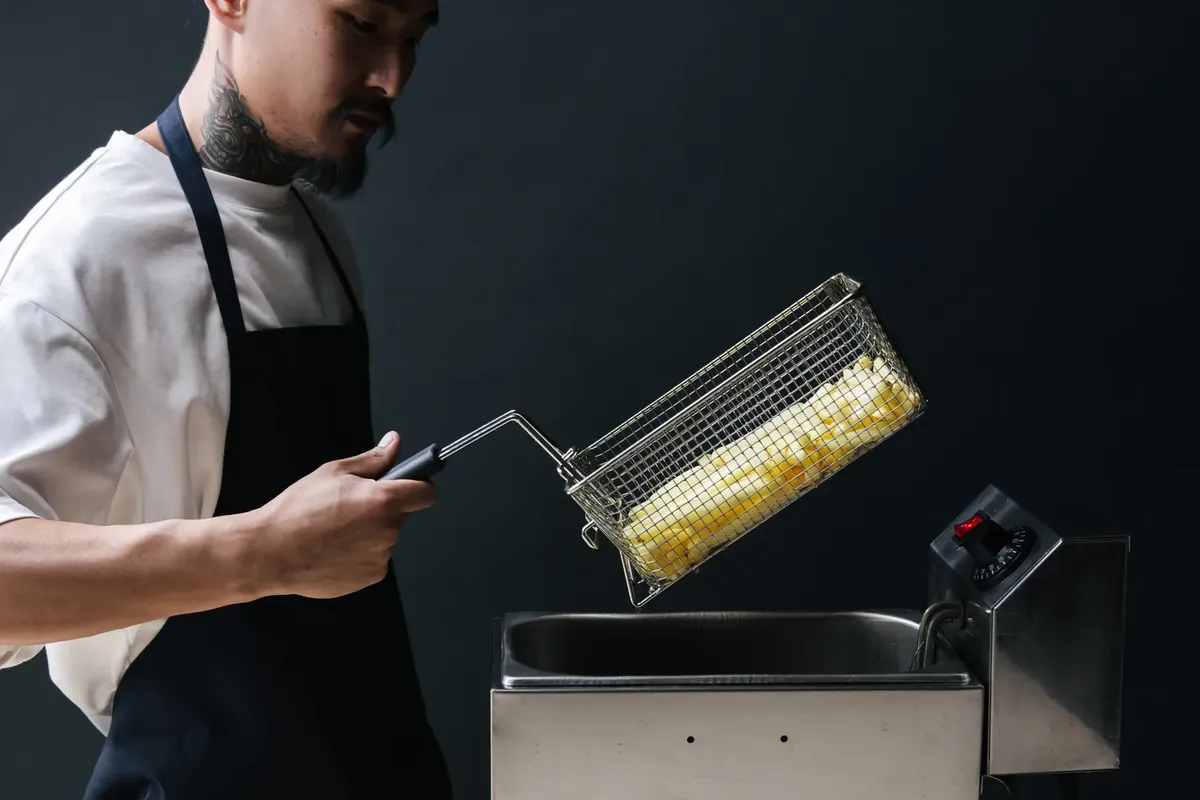
In the bustling kitchen, the chef watches how the golden potato does swell in the hot oil as the steam rises against his face.
A chef carefully monitors the temperature of hot fat to ensure the perfect transition from a soft interior to a crisp shell. In the two-stage or two-bath method, the first bath, sometimes called blanching, is in hot fat (around 160 °C/320 °F) to cook the fries through.
This initial step ensures the heat penetrates the core of the potato.
During this initial frying process at approximately 150°C, water on the surface of the cuts evaporates off the surface and the water inside the cuts gets absorbed by the starch granules, causing them to swell and produce the fluffy interior of the fry.
This creates a soft, airy texture that serves as the foundation for the final product. The second stage relies on this prepared internal structure to achieve a successful finish.
What are the different French cutting styles? A cook selects various cutting tools to transform a single potato into different shapes like thick batons or thin straws.
Thick-cut fries are called pommes Pont-Neuf or simply pommes frites (about 10 mm or 3⁄8 in); thinner variants are pommes allumettes (matchstick potatoes; about 7 mm or 1⁄4 in), and pommes paille (potato straws; 4 mm or 1⁄8 in). These distinctions allow for diverse culinary applications.
| Cut Style | Measurement (approx.) |
|---|---|
| Pommes Pont-Neuf | 10 mm |
| Pommes Allumettes | 7 mm |
The choice of cut directly influences how the heat is absorbed during the two-stage process. For example, thinner cuts like pommes paille require much faster heat transfer than the thicker Pont-Neuf style. Understanding these dimensions is essential for French cuisine shifts 2025.
How does temperature affect the texture of fries?
The kitchen atmosphere shifts as the oil temperature rises to create the final crunch. After the first bath, they are more briefly fried in very hot fat (190 °C/375 °F) to crisp the exterior. This sudden increase in temperature is the key to the final texture.
As of 2025, The Agency for French Education Abroad has 600 locations and 397,000 students, according to The Agency.
During the second frying process (approximately 180 °C), the remaining water on the surface of the cuts evaporates and the gelatinised starch molecules that collected towards the potato surface are cooked again, forming the crisp exterior.
This dual-temperature approach ensures that the starch is properly set while the surface becomes golden and firm. The future of French dining relies on such precise thermal management.
How do I make the perfect fries? A culinary student carefully follows a sequence of temperature adjustments to master the art of frying. To replicate this professional standard at home, follow these steps:
- Perform the first bath in hot fat at approximately 160 °C to cook the interior through. 2. Remove the cuts and allow them to rest slightly before the second stage. 3. Fry the cuts briefly in very hot fat at approximately 190 °C to crisp the exterior.
I once practiced this two-stage method by carefully monitoring the fat temperature to ensure the starch swelled correctly. Always perform a final check on the exterior crispness before removing the batch from the oil.
These culinary trends France 2025 emphasize that precision in temperature is non-negotiable for quality.
What are the limitations of these techniques?
A chef considers the specific potato variety when applying heat to ensure the starch behaves as expected. The effectiveness of the two-stage method depends on the moisture content and starch-to-water ratio of the specific potato used.
If the initial temperature is too low, the potato may absorb too much fat instead of swelling. If the second temperature is too low, the exterior will not achieve the desired crispness. These variables are central to the evolution of French recipes.
The subject here is France 2025 food trends.
The same subject is also called Global cooking trends France.
This part also covers Modern French culinary flow.
Global cooking methods in France
Related
- French language roots guide how standards were established
- How does education impact culinary interest?
How does the historical significance of French gastronomy relate to modern techniques? 1. The recognition of French gastronomy by UNESCO in November 2010 highlights the deep cultural value of its culinary methods. 2. Modern kitchens utilize historical French standards to elevate everyday food items, demonstrating a continuity between past and present. 3. This adherence to established French principles informs the precise technical execution seen in current food trends.
The emphasis on traditional heritage within contemporary cooking practices shows that these techniques are not merely historical artifacts but living standards. The detailed control over processes, such as the two-stage frying, reflects the meticulous nature of the original French culinary arts.
According to UNESCO, French gastronomy was added to its lists of the world's "intangible cultural heritage" in November 2010.
This dedication to refinement is what places French gastronomy on the world stage.
What considerations guide the selection of potato cuts? 1. The selection of a potato cut dictates the rate at which heat transfers during the frying sequence. 2. Thicker cuts, like pommes Pont-Neuf, necessitate a different thermal approach compared to thinner cuts. 3. The specific dimension chosen directly impacts how the starch gelatinization and moisture evaporation occur throughout the fry.
Knowing the approximate size of the cut allows the cook to anticipate the necessary time in each fat bath. For instance, a smaller cut will reach the required internal temperature faster than a larger one.
This dimensional awareness is critical when applying the two-stage method for optimal results in French cooking.
The French tradition values the perfect marriage of ingredient and technique, and the cut serves as the initial bridge between these two elements. Proper selection ensures the potato structure can handle the thermal stresses of the frying process.





Comments 0