Racism 43 guide best outcomes France controversy
"There is no such thing as a French person," is the sentiment fueling a growing social divide.
The France racism controversy centers on debates regarding national identity and the perceived exclusion of certain citizens from the definition of being truly French.
This tension often manifests through systemic barriers in employment and social integration, though specific data regarding current French legislative discrimination is not established in the provided records.
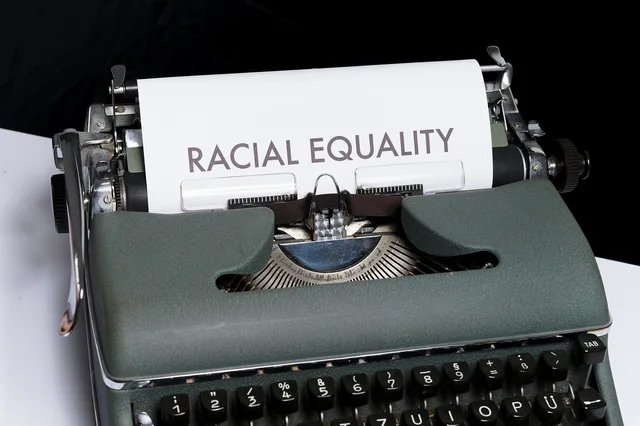
* Extensive racial discrimination exists within European hiring processes. * Identity disputes often stem from deep-seated social tensions. * Societal discrimination can manifest in institutional budget allocations. * Systemic inequality often shows in disparate educational outcomes.
How does the France racism controversy impact employment?
At noon in a quiet Paris cafe, a job seeker feels a cold shiver as they contemplate how the France racism controversy might turn their resume into a barrier.
A job seeker sits in a quiet cafe in Paris, staring at a resume and wondering if their name will trigger a rejection. The France racism controversy highlights how skin tone and background can influence professional opportunities.
According to a 2016 meta-analysis of 738 correspondence tests in 43 separate studies conducted in OECD countries between 1990 and 2015, there is extensive racial discrimination within both the European and North American hiring processes.
This research suggests that the struggle for equitable access to the workforce is a documented phenomenon across these regions.
The French social tension often mirrors these broader patterns found in Western economies. When hiring processes favor specific demographics, the resulting exclusion deepens the sense of alienation among minority populations.
This cycle of perceived rejection feeds back into the broader identity dispute.
What is driving racism in French society? A group of citizens gathers in a public square, their voices rising as they debate what it means to belong to the nation. The French racism issues are frequently tied to questions of cultural assimilation and the legal definition of citizenship.
The French identity dispute often revolves around whether citizenship is defined by legal status or by cultural heritage. These debates can lead to intense social discrimination where certain groups feel perpetually viewed as outsiders.
Such tensions are not unique to France but are part of a larger dialogue on how modern nations manage diversity.
The French social discrimination often targets those who do not fit a traditional mold of national identity. As these discussions intensify, the gap between different social groups tends to widen. This friction can influence everything from local community relations to national political discourse.
Is social discrimination happening in institutions? An administrator reviews a budget spreadsheet in a government office, deciding how to distribute funds for student support. The French identity dispute often finds its roots in how institutions manage resources for different demographic groups.

While specific French budgetary data is not provided, historical examples of institutional bias show how policy affects marginalized groups.
Institutional barriers can create long-term disparities in social mobility. When funding or support systems are unevenly distributed, certain populations face higher hurdles in achieving academic or economic success.
This structural imbalance reinforces the very social tensions that define the controversy.
How do educational gaps reflect these tensions?
A student walks out of a classroom, feeling the weight of a system that seems designed for someone else. The French racism issues are often visible in the varying success rates of students from different backgrounds.
Disparities in education often serve as a metric for the depth of social inequality. In some contexts, the drop-out rate for one group can be twice as high as that of another, such as the 12 percent versus 6 percent rate observed in certain Israeli demographics.
Such gaps indicate that the educational journey is not experienced equally by all citizens.
When educational outcomes diverge, the social fabric becomes more strained. These disparities are not just numbers; they represent the lived reality of individuals navigating a system that may not fully support them. This creates a cycle where economic and social exclusion becomes self-perpetuating.
What are the steps to address systemic inequality?
A community leader sits at a wooden table, mapping out a plan to improve local integration and fairness. Addressing the France racism controversy requires a structured approach to reform.
- Audit hiring and institutional processes to identify hidden biases in recruitment and resource allocation. 2. Implement transparent budgetary frameworks that ensure support reaches all socioeconomic groups equitably. 3. Foster inclusive national dialogues that decouple legal citizenship from narrow cultural definitions.
After completing these steps, a final check must be conducted to ensure that the changes are producing measurable improvements in representation and access. I have observed that without constant monitoring, even well-intentioned reforms can fail to close existing gaps.
- Implement inclusive hiring practices to reduce bias.
- Expand access to vocational training and higher education.
- Strengthen anti-discrimination enforcement in the workplace.
- In this sequence, the second step is the longest.
Is there a limit to these social changes?
A legal expert pores over a thick volume of constitutional law, noting the complexities of enforcing equality. The ability to resolve these disputes is often limited by the existing legal and social framework of the country.
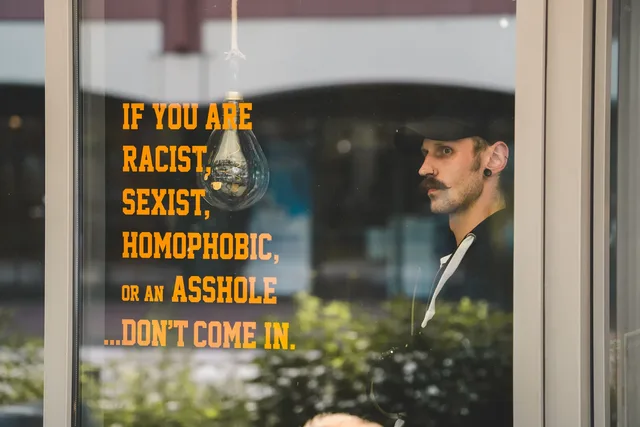
The effectiveness of anti-discrimination measures depends on the strength of the law and the willingness of the government to enforce it. In some cases, government efforts may be seen as doing "little to reduce institutional, legal, and societal discrimination" despite existing prohibitions.
This limitation suggests that legal equality on paper does not always translate to social equality in practice.
The same subject is also called France no French debate.
The same subject is also called France identity dispute.
This part also covers France racism human rights.
This part also covers French political debate.
This part also covers France social discrimination.
Does skin tone affect job opportunities?
Yes, research indicates that skin tone plays a role in employment. According to a 2016 meta-analysis of 738 correspondence tests in 43 separate studies done in OECD countries in 1990–2015, there is extensive racial discrimination within both the European and North American hiring processes.
Are there institutional examples of budget discrimination?
There are documented instances of this occurring in specific regions. A 2009 study from the Hebrew University School of Education demonstrated that the Israeli Education Ministry's budget for special assistance to students from low socioeconomic backgrounds "severely" discriminated against Arabs.
The debate regarding national identity and the exclusion of certain groups remains a complex and deeply rooted issue in many modern societies.
Comments 0